

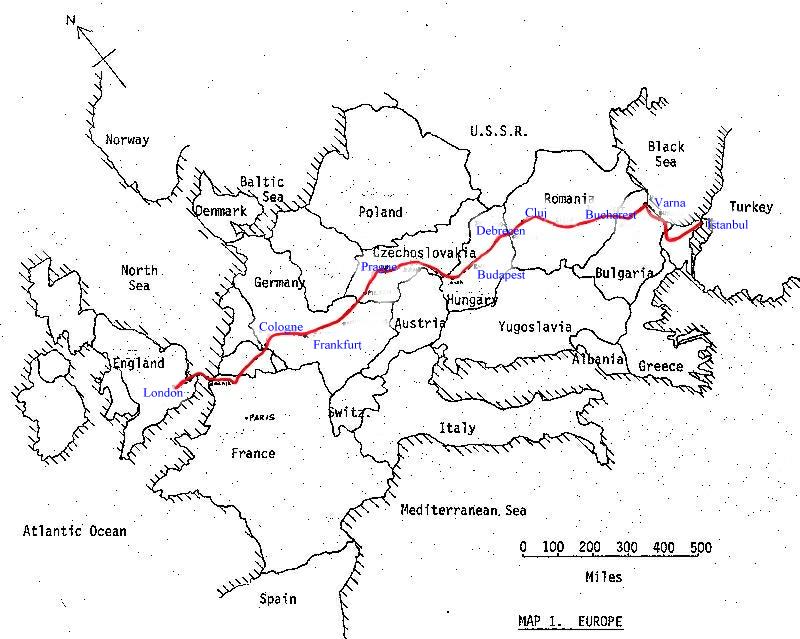
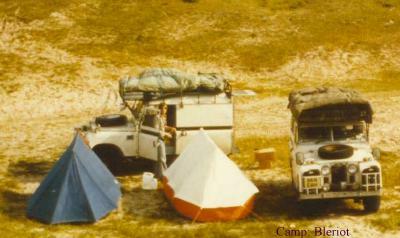
 The Expedition is at last under way!!
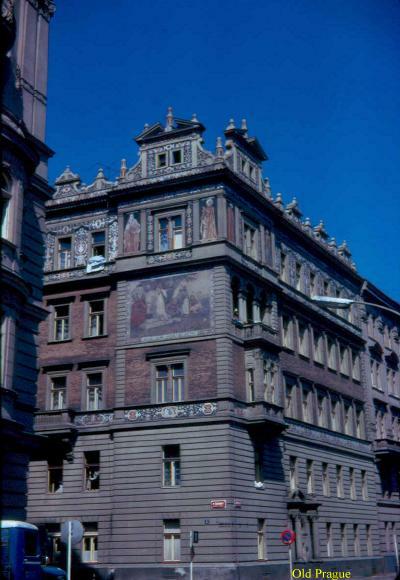 Prague is a fascinating city. We spent most of the day looking around, with Brian as guide. Buy food and
drink in working areas (e.g. on the E12 going in) they are far cheaper than tourist areas. It is the first
city we have encountered with a distinctive atmosphere (Western cities are increasingly all alike). There
are beautiful old buildings, outdoor-painted walls and statue-embellished bridges dating from the mediaeval
period. For 2Kr you can visit the National Archives in Prague Castle; well worth it. They have collected the
treasures from the monastery libraries here; the government have adopted a very responsible attitude toward
their national heritage - most praiseworthy. In the Archive is a city map of 1562, showing one district as
(even then) the Old City. This is a real rabbit-warren of narrow streets, with a wonderful mediaeval clock in a square, showing the moon's phases, etc.
On the west bank of the Vitava, the city is incredibly hilly, but much flatter on the East. It seems to be
the boundary between the Bohemian mountains and the flat plains of Slovenia.
There is just too much to take in, in Prague, we left in late afternoon to get some of the distance to Brno
behind us. Camp was pitched some 40km from Jihlava, at the roadside. Considerable nuisance was experienced
from mosquitoes, so we went to bed very early (for us) at about 2130A. Up early next morning, and on the road
by 0700A.
Czech roads are rather poor, but have excellent signposting. The main criticisms are large stretches of
cobblestones, usually in towns, and numerous (un)level crossings, for which one must slow right down. Most
level crossings are not gated.
Yesterday proved indeed a boiling-hot day, as today looks like being also.
Prague is a fascinating city. We spent most of the day looking around, with Brian as guide. Buy food and
drink in working areas (e.g. on the E12 going in) they are far cheaper than tourist areas. It is the first
city we have encountered with a distinctive atmosphere (Western cities are increasingly all alike). There
are beautiful old buildings, outdoor-painted walls and statue-embellished bridges dating from the mediaeval
period. For 2Kr you can visit the National Archives in Prague Castle; well worth it. They have collected the
treasures from the monastery libraries here; the government have adopted a very responsible attitude toward
their national heritage - most praiseworthy. In the Archive is a city map of 1562, showing one district as
(even then) the Old City. This is a real rabbit-warren of narrow streets, with a wonderful mediaeval clock in a square, showing the moon's phases, etc.
On the west bank of the Vitava, the city is incredibly hilly, but much flatter on the East. It seems to be
the boundary between the Bohemian mountains and the flat plains of Slovenia.
There is just too much to take in, in Prague, we left in late afternoon to get some of the distance to Brno
behind us. Camp was pitched some 40km from Jihlava, at the roadside. Considerable nuisance was experienced
from mosquitoes, so we went to bed very early (for us) at about 2130A. Up early next morning, and on the road
by 0700A.
Czech roads are rather poor, but have excellent signposting. The main criticisms are large stretches of
cobblestones, usually in towns, and numerous (un)level crossings, for which one must slow right down. Most
level crossings are not gated.
Yesterday proved indeed a boiling-hot day, as today looks like being also.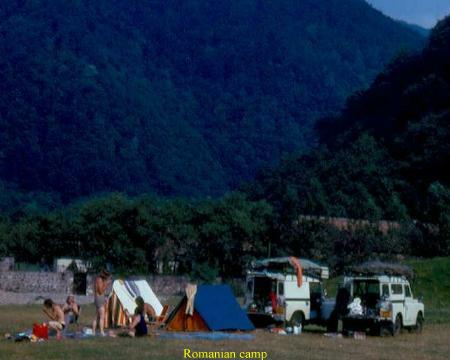 We have stopped for the afternoon/evening by a river (in which Keith and I went swimming), for a rest. We
thought to try fording the river with the Rovers, but it is several feet deep. Just up the track from a
mental hospital! An open institution, so obviously no risk to us. The place is popular for swimming with
the locals, who drive cars down to the bank, over ground we tackled in low-range gears! They don't go back
up that way, though.
The hospital patients occupy themselves by sorting large rocks from the river-bed, which a lorry comes down
to collect, presumably for roadbuilding. The terrain is very reminiscent of northern Spain, green hillsides,
etc.
We have stopped for the afternoon/evening by a river (in which Keith and I went swimming), for a rest. We
thought to try fording the river with the Rovers, but it is several feet deep. Just up the track from a
mental hospital! An open institution, so obviously no risk to us. The place is popular for swimming with
the locals, who drive cars down to the bank, over ground we tackled in low-range gears! They don't go back
up that way, though.
The hospital patients occupy themselves by sorting large rocks from the river-bed, which a lorry comes down
to collect, presumably for roadbuilding. The terrain is very reminiscent of northern Spain, green hillsides,
etc.
 My rings are, of course, also brass or copper! Almost every Gypsy tried to sell them, we suspect they are
mass-produced somewhere.
Yesterday, we set out for Bucharest. Our fuel was expected to last us to Pitesti, at the head of the
Autostrada to Bucharest. Changing money there, we went shopping with the help of a Romanian student we met
while asking directions.
Manufactured foods are nearly at Western prices, but fresh fruit and vegetables are unbelievably cheap (2-3
lei per kilo).
No fuel though; there is never more than one petrol station in a Romanian town, usually it seems, on the main
road in from the North. So off down the Autostrada, to leave at the first exit-point, as the village 10km off
the Autostrada had fuel, according to Carol's map. If, that is, we got that far. In fact we did, and took on
45 litres. The old fuel, in the event, just lasted to the only service area on the Autostrada, 36km from
Bucharest. A total run of 420 miles on the Hungarian fuel.
We entered Bucharest at nightfall - this driving into unfamiliar cities at nightfall is very bad planning!
Losing our way twice, finally we got on the Giurgiu road, and camped in a layby 13km out.
This morning, Rik and Brian have taken the girls into Bucharest, to set them on the Constanta road, and to
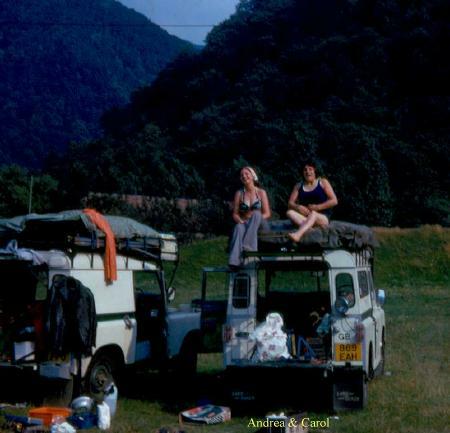
take Brian to the hospital. Andrea and Carol have completely shared our lives for the last four days, and
brightened them up considerably. However in retrospect, I feel that four is definitely a maximum size for a
concern of this type, if not itself too large.
Woken early in the morning by a gang dumping an excavator and transporter right beside us! On getting up, we
found camped beside us, a Bulgarian family, who advised us to take the Eastern road Ruse - Sumen - Varna -
Burgas - Malko Tarnovo; the road is prettier and no longer, and we avoid the Greek frontier near Edirne,
with its political complications at present. The run across Bulgaria (according to the map he gave us) is
some 500km. Bulgarian petrol is about 0.85 leva/litre. Also, we can buy tourist coupons for it at the border.
Romanian roads are good, with few cobbled areas outside cities. The lorries are almost invariably 2-wheel
drive, which shows confidence in their roads. (Czech lorries are mostly 6-wheel drive jobs; they need to be!)
The first few miles after the previous (riverside) camp crossed the rump of the Carpathians, very mountainous
country, but relatively little lift in the road, as it follows the river.
After Pitesti, an industrial town, we briefly skirted the big Ploesti oilfield, with one or two small fields
of up to a dozen wells, all of the pumped type.
Very clear evidence of the "paranoia" common to many Socialist countries; armed guards on the river-dam before
Rimnicu Vilcea, "No Photography" signs by industrial complexes, and so on. These "No Photography" signs serve
only to concentrate one's attention on the prohibited object, which otherwise might well have gone unnoticed.
The hospital asked Brian to return at 1400B, he decided this was too much bother, so we broke camp at 1330B.
Reached frontier at 1445B, I am writing this in the Customs queue, beset by flies.
My rings are, of course, also brass or copper! Almost every Gypsy tried to sell them, we suspect they are
mass-produced somewhere.
Yesterday, we set out for Bucharest. Our fuel was expected to last us to Pitesti, at the head of the
Autostrada to Bucharest. Changing money there, we went shopping with the help of a Romanian student we met
while asking directions.
Manufactured foods are nearly at Western prices, but fresh fruit and vegetables are unbelievably cheap (2-3
lei per kilo).
No fuel though; there is never more than one petrol station in a Romanian town, usually it seems, on the main
road in from the North. So off down the Autostrada, to leave at the first exit-point, as the village 10km off
the Autostrada had fuel, according to Carol's map. If, that is, we got that far. In fact we did, and took on
45 litres. The old fuel, in the event, just lasted to the only service area on the Autostrada, 36km from
Bucharest. A total run of 420 miles on the Hungarian fuel.
We entered Bucharest at nightfall - this driving into unfamiliar cities at nightfall is very bad planning!
Losing our way twice, finally we got on the Giurgiu road, and camped in a layby 13km out.
This morning, Rik and Brian have taken the girls into Bucharest, to set them on the Constanta road, and to
take Brian to the hospital. Andrea and Carol have completely shared our lives for the last four days, and
brightened them up considerably. However in retrospect, I feel that four is definitely a maximum size for a
concern of this type, if not itself too large.
Woken early in the morning by a gang dumping an excavator and transporter right beside us! On getting up, we
found camped beside us, a Bulgarian family, who advised us to take the Eastern road Ruse - Sumen - Varna -
Burgas - Malko Tarnovo; the road is prettier and no longer, and we avoid the Greek frontier near Edirne,
with its political complications at present. The run across Bulgaria (according to the map he gave us) is
some 500km. Bulgarian petrol is about 0.85 leva/litre. Also, we can buy tourist coupons for it at the border.
Romanian roads are good, with few cobbled areas outside cities. The lorries are almost invariably 2-wheel
drive, which shows confidence in their roads. (Czech lorries are mostly 6-wheel drive jobs; they need to be!)
The first few miles after the previous (riverside) camp crossed the rump of the Carpathians, very mountainous
country, but relatively little lift in the road, as it follows the river.
After Pitesti, an industrial town, we briefly skirted the big Ploesti oilfield, with one or two small fields
of up to a dozen wells, all of the pumped type.
Very clear evidence of the "paranoia" common to many Socialist countries; armed guards on the river-dam before
Rimnicu Vilcea, "No Photography" signs by industrial complexes, and so on. These "No Photography" signs serve
only to concentrate one's attention on the prohibited object, which otherwise might well have gone unnoticed.
The hospital asked Brian to return at 1400B, he decided this was too much bother, so we broke camp at 1330B.
Reached frontier at 1445B, I am writing this in the Customs queue, beset by flies.
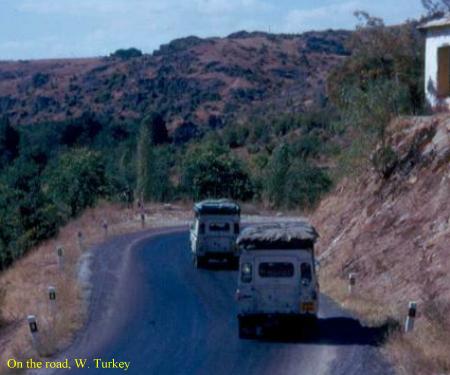 The road began as another scenic stretch, then developed into a series of long straight runs over more or
less level ground. Turkish drivers appear at least as bad as the Hungarians; due I suppose, to the "Insh'
Allah" philosophy (Islam being a decidedly fatalistic creed: if you crash, it is "Kismet" - the Will of
Allah). ["Insh'Allah" = "by the grace of God", a similar meaning to the English "God willing"]
The road began as another scenic stretch, then developed into a series of long straight runs over more or
less level ground. Turkish drivers appear at least as bad as the Hungarians; due I suppose, to the "Insh'
Allah" philosophy (Islam being a decidedly fatalistic creed: if you crash, it is "Kismet" - the Will of
Allah). ["Insh'Allah" = "by the grace of God", a similar meaning to the English "God willing"] |
Copyright © 1974 - 2004 David R. Brooks | |
 Back to Home Page Back to Home Page
|
|
|